
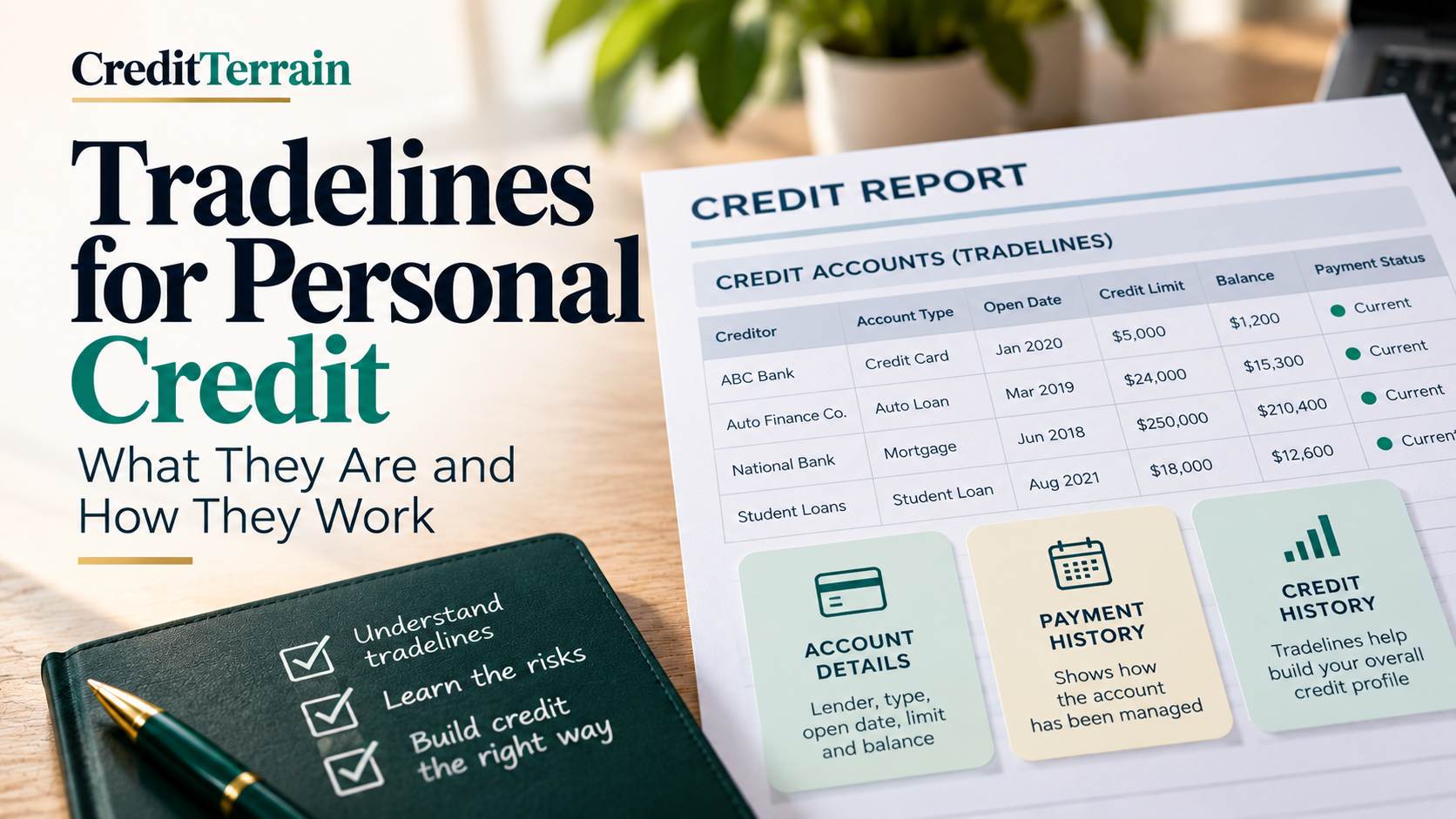
Tradelines for Personal Credit: What They Are and How They Work
This one should stay educational and careful. A tradeline is simply the record of an account on a consumer credit report, including details such as the creditor, account age, balance, limit, and payment history. Experian The important distinction is between legitimate authorized-user relationships and paid “tradeline” or “piggybacking” schemes marketed as quick credit fixes; the FTC has taken action against companies making deceptive claims around those practices. Consumer Advice
Tradelines for Personal Credit: What They Are and How They Work
When you look at a credit report, each credit account usually appears as its own record. That record is commonly called a tradeline.
A tradeline can show information such as the name of the lender or card issuer, when the account was opened, the type of account, credit limit, current balance, and payment history. Together, those records help make up the credit history that lenders and credit-scoring models may review. Experian
Tradelines are not special products that you have to purchase. If you have a credit card, auto loan, mortgage, student loan, or another account that is reported to a credit bureau, that account may already appear as a tradeline on your credit report.
The term becomes more confusing because some credit-repair businesses use “tradeline” to describe the practice of adding someone as an authorized user to another person’s credit card account. That is where consumers need to be much more careful.
What Information Can a Tradeline Contain?
A tradeline can contain several pieces of information about a credit account. Depending on the account and the credit bureau, that may include:
- Creditor or lender name
- Account type
- Date the account was opened
- Credit limit or original loan amount
- Current balance
- Payment status
- Payment history
- Whether the account is open or closed
- Your relationship to the account
The exact information reported can differ by lender and account type.
If information on a tradeline is incorrect, it can be worth reviewing your credit reports and disputing inaccurate or incomplete information. The Consumer Financial Protection Bureau specifically recommends checking for problems such as incorrect balances, wrong account status, inaccurate payment information, or being listed as the owner of an account when you are actually only an authorized user. Consumer Financial Protection Bureau
What Is an Authorized User Tradeline?
An authorized user is someone the primary cardholder permits to use a credit card account.
The authorized user is different from the primary account holder. In general, an authorized user is not legally responsible for repaying the debt simply because they are listed on the account. Consumer Financial Protection Bureau
Credit card issuers often report authorized-user relationships to the credit bureaus. Experian’s reporting guidance, for example, identifies authorized users separately from account owners and notes that authorized-user reporting applies to credit cards and retail charge accounts.
Because the account may appear on the authorized user’s credit report, its history can potentially become part of the information considered by a credit-scoring model.
That does not mean becoming an authorized user guarantees a higher credit score.
Can Being an Authorized User Help Build Credit?
It can sometimes help establish credit history, particularly when the account is well managed and the issuer reports authorized users.
But the effect is not guaranteed.
Credit-scoring models can treat authorized-user accounts differently, and the rest of your credit report still matters. An older account with low utilization and consistent payment history may look very different from an account carrying a high balance or showing late payments.
There is also a practical difference between becoming an authorized user on the account of a spouse, parent, relative, or trusted person and paying a stranger to temporarily add you to an account.
That second practice is commonly marketed as “buying tradelines.”
What Does Buying Tradelines Mean?
Some companies offer to add consumers as authorized users to credit card accounts belonging to strangers.
The customer pays a fee. The company arranges for the customer’s name to be added to an established credit card account, often without giving the customer access to the physical card or permission to make purchases.
The hope is that the account history will appear on the customer’s credit report and improve their credit score.
This practice is sometimes called:
- Buying tradelines
- Tradeline renting
- Credit piggybacking
- Authorized-user piggybacking
This is where consumers should be especially cautious.
Why Paid Tradelines Can Be Risky
The Federal Trade Commission has taken enforcement action against credit-repair operations that marketed paid authorized-user tradelines with claims that consumers could dramatically improve their credit scores.
In one case, the FTC described a scheme in which consumers paid to become authorized users on strangers’ accounts while receiving no actual access to the credit line. The agency challenged claims that the practice would substantially improve consumers’ scores and alleged other deceptive and unlawful credit-repair practices.
A paid tradeline also does not erase legitimate negative information already appearing on your credit reports.
It does not guarantee:
- A particular score increase
- Loan approval
- Credit card approval
- A better interest rate
- Permanent credit improvement
A lender may also consider far more than a credit score when making a decision.
Tradelines Are Not the Same as Credit Repair
This distinction matters.
A legitimate tradeline is simply an account reported on your credit file.
Credit repair, on the other hand, usually involves reviewing credit reports and addressing inaccurate or incomplete information.
Accurate negative information generally cannot simply be removed because someone does not like it. Companies that promise to remove legitimate negative information or guarantee dramatic score increases should be treated cautiously.
If you find an actual error, you have the right to dispute inaccurate information directly with the credit reporting company and the company that supplied the information. Consumer Financial Protection Bureau
Primary Tradelines vs. Authorized User Tradelines
A primary tradeline is an account for which you are responsible.
For example, if you open a credit card in your own name, that account can appear on your report as one of your own accounts.
An authorized-user tradeline belongs primarily to someone else, but you have been added to the account as an authorized user.
That difference can matter when lenders review a credit report.
Being an authorized user does not demonstrate the same thing as independently qualifying for and managing your own credit account.
For someone trying to establish credit over the long term, building a history with accounts in their own name can be an important part of the process.
Can You Remove an Authorized User Tradeline?
Yes, an authorized user can generally be removed from a credit card account.
The primary cardholder can contact the issuer and request removal. The CFPB also notes that an authorized user is different from a joint account holder, so the process for removing a joint owner can be different.
After removal, reporting changes may take time to appear on credit reports.
If an account is incorrectly reporting you as an owner instead of an authorized user, that is the type of credit-report error worth investigating and disputing.
A Better Way to Build Credit
If your real goal is stronger personal credit, focus on the fundamentals rather than trying to engineer a quick score increase.
That usually means:
Pay your accounts on time. Keep revolving balances manageable relative to available credit. Avoid opening accounts you do not need. Review your credit reports for inaccurate information. Give your accounts time to establish history.
If you are just beginning, a secured card or beginner unsecured card may provide a more straightforward path toward establishing credit in your own name.
CreditTerrain’s guide to Beginner Credit Cards to Build Credit can help explain those options.
Frequently Asked Questions
What is a tradeline on a credit report?
A tradeline is the record of an individual credit account appearing on a credit report. It can contain information about the creditor, account type, opening date, balance, limit, and payment history.
Is a credit card a tradeline?
If a credit card issuer reports the account to a credit bureau, the account can appear as a tradeline on the cardholder’s credit report.
Does becoming an authorized user guarantee a higher credit score?
No. Authorized-user accounts may affect credit reports and scores, but there is no guaranteed score increase. The account’s history, the scoring model, and the rest of the person’s credit profile can all matter.
Is buying tradelines a good way to build credit?
I would not recommend treating paid tradelines as a dependable credit-building strategy. The FTC has challenged companies that marketed paid credit piggybacking with deceptive promises of large score improvements. Consumer Advice
Is an authorized user responsible for the debt?
Generally, an authorized user is not responsible for repaying the account simply because they are an authorized user. That differs from being a joint account holder or co-signer. Consumer Financial Protection Bureau
Can inaccurate tradelines be disputed?
Yes. Consumers can dispute inaccurate or incomplete information with the credit reporting company and the company furnishing the information. Consumer Financial Protection Bureau
Sources
Consumer Financial Protection Bureau — Credit Reports and Common Errors
Federal Trade Commission — Credit Repair and Tradeline Enforcement
Experian — Credit Reporting and Tradeline Definitions
CreditTerrain Editorial Note
CreditTerrain provides educational information and does not offer credit repair services or guarantee credit-score changes. Credit reporting, scoring, and underwriting practices can vary by bureau, scoring model, lender, and account.